


Blog
Padmasambhava

Padmasambhava: The Second Buddha and the Pioneer of the Snowland
In the vast historical sky of Tibetan Buddhism, Padmasambhava is undoubtedly the most brilliant and dazzling star. Revered as “Guru Rinpoche”—the “Precious Master”—he is the founder of Tibetan Buddhism, the progenitor of the Nyingma school, and venerated by devotees as the “Second Buddha.” His life, woven from history and myth, forms a magnificent legend that deeply shaped the spiritual world of the Tibetan Plateau.
Miraculous Birth and the Pursuit of the Dharma
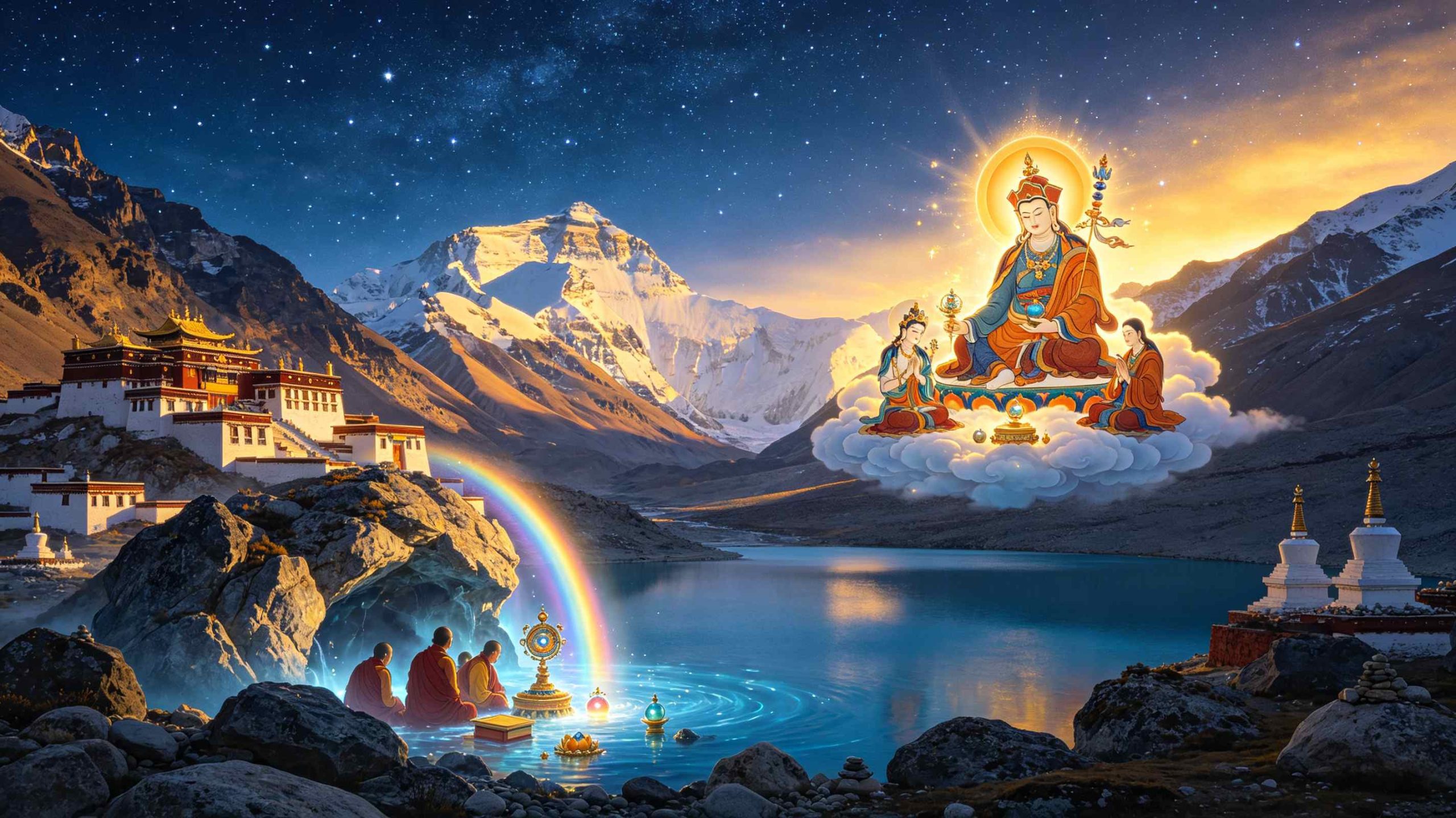
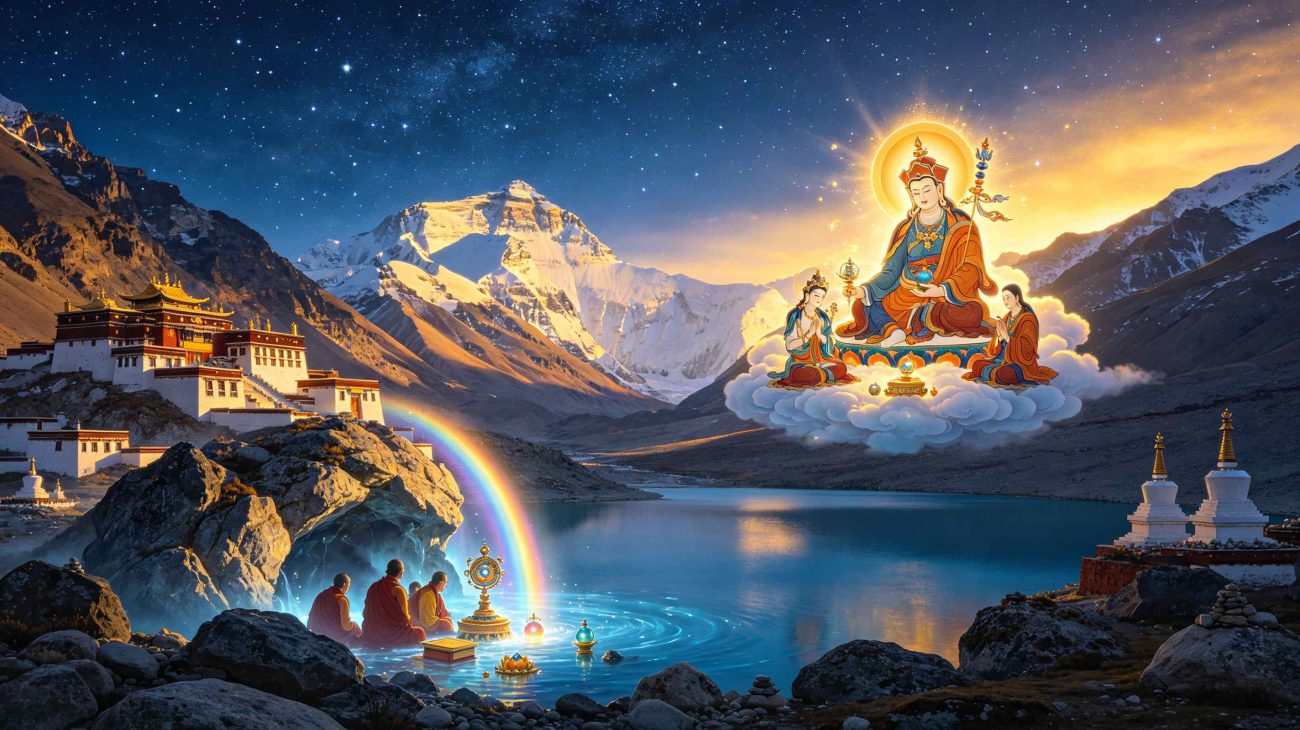
Padmasambhava’s birth was filled with incredible legendary color. According to tradition, he was not born from a womb, but around the 8th century AD, he was miraculously born from a five-colored lotus in Lake Danakosha in the kingdom of Oddiyana, western India (present-day Swat region, Pakistan). King Indrabhuti of Oddiyana discovered this dignified young child while searching for “jewels.” Overjoyed, he brought him back to the palace, raised him as the crown prince, and named him “Saroruhavajra” (Lake-Born Vajra).
However, Padmasambhava’s aspirations did not lie in worldly royal power. Deeply feeling the impermanence of the world, he resolutely abdicated and entered the monastic life under the guidance of Vajrasattva. He subsequently studied under numerous great accomplished masters, acquiring extensive knowledge of both Sutra and Tantra. At the famed Buddhist center of Nalanda Monastery, he pursued studies under masters like Shantarakshita; in charnel grounds, he endured extraordinary austerities to subdue inner afflictions and outer obstacles, achieving supreme realization. Seeking profound Tantric teachings, he traveled throughout India and even journeyed far to Mount Wutai in China to learn astronomy and astrology, which lent a rich flavor of Chinese Chan Buddhism to his teachings.
Journey to Tibet and the Establishment of the Sangha
Padmasambhava’s journey to Tibet to propagate the Dharma was an epoch-making event in Tibetan Buddhist history. In the 8th century AD, the Tibetan emperor Trisong Detsen devoutly believed in Buddhism, but the spread of the Dharma encountered repeated resistance on the Snowland Plateau, facing strong opposition from the native Bon tradition. Upon the recommendation of Master Shantarakshita, Trisong Detsen sent envoys to invite Padmasambhava to Tibet to subdue demonic forces and propagate the teachings.
Although the exact year of his entry into Tibet remains a matter of historical debate, his deeds are widely legendary. It is said that along the way, Padmasambhava subdued numerous spirits, demons, and obstacles hostile to the Dharma—including the Twelve Tenma Goddesses—and bound them by oath to become protectors of Buddhism. With unhindered miraculous powers and wisdom, he pacified opposing forces and cleared the path for the spread of the Dharma.
With the support of Trisong Detsen, Padmasambhava oversaw the construction of Samye Monastery, the first regular monastery in Tibet containing the Three Jewels (Buddha, Dharma, and Sangha). The architectural style of Samye combined Indian, Chinese, and Tibetan elements, forming a three-dimensional mandala representing the Buddhist cosmos. To test whether Tibetans possessed the spiritual capacity for monastic life, he and Shantarakshita ordained the first group of Tibetan monks—the famous “Seven Tested Men”—thereby establishing the initial Sangha order. He also supervised extensive translation work of Buddhist scriptures, laying the foundation for the Tibetan Buddhist Canon.
The Eight Manifestations of Guru Rinpoche and the Terma Tradition
To liberate beings of varying capacities, Padmasambhava manifested in different forms, famously known as the “Eight Manifestations of Guru Rinpoche” (Guru Eight Names). Each manifestation represents a distinct aspect of his compassion and wisdom: “Shakya Senge” represents his monastic manifestation and pure discipline; “Dorje Drolo” (Wrathful Vajra) represents his fierce power to subdue demons and shatter ignorance; and “Loden Chokse” (Wise Lotus) represents his vast learning and ocean-like wisdom. These forms are not only treasures of sacred art but also central objects for practitioners’ visualization and supplication.
Foreseeing future tribulations for the Dharma, Padmasambhava and his spiritual consort, Yeshe Tsogyal, along with other disciples, concealed profound Tantric teachings, scriptures, ritual implements, and sacred relics within the mountains, lakes, rocks, and palaces of Tibet to be discovered by fortunate disciples in later generations. These hidden teachings are known as Terma (Treasure Texts). Great subsequent “Tertöns” (Treasure Revealers)—such as Nyangral Nyima Özer and Taranatha—claimed to have unearthed treasures buried by Padmasambhava. The famous Bardo Thodol (The Tibetan Book of the Dead, or Liberation Through Hearing in the Bardo) is one widely renowned Terma teaching.
Spiritual Legacy and Eternal Blessings
After completing his great work of propagating the Dharma, Padmasambhava departed Tibet to tame the beings of the Demon Realm (Rakshasa land). Yet, in the hearts of the Tibetan people, he has never truly left. He left behind countless instructions and supplication prayers, notably the “Guru Rinpoche Mantra” (Om Ah Hum Vajra Guru Padma Siddhi Hum), which is believed to encapsulate the complete energy of his compassion and wisdom. Devotees believe that on the 10th day of every lunar month (the Guru Rinpoche Tsok Day), Padmasambhava personally descends to bless all disciples who pray to him with sincere devotion.
Padmasambhava is typically depicted wearing a lotus hat, clad in three layers of Dharma robes, holding a skull cup (kapala) in his left hand and a vajra in his right, seated in the full lotus posture atop a lotus throne. His expression is serene yet subtly wrathful, embodying his nature of “wrathful on the outside, infinitely compassionate on the inside.” Today, throughout Tibet, Bhutan, Nepal, and beyond, temples and statues dedicated to him abound, alongside his sacred “body imprints” and “footprints.” The famous “Looks Like Me” (Nangsi Silnon) statue at Samye Monastery is regarded as a precious sacred relic left to posterity, witnessing his unfading compassion and blessings for the beings of the Snowland.
Padmasambhava was not only the pioneer of Tibetan Buddhism but also a powerful spiritual symbol. He integrated the profound Indian Dharma with the native culture and beliefs of Tibet, allowing it to take root and flourish on the “Roof of the World” until it grew into a magnificent, towering tree. As Dilgo Khyentse Rinpoche once remarked: “In the sacred land of India and the snow-clad land of Tibet, there appeared many incredible and matchless masters. Yet among them all, the one who possesses the greatest compassion and bestows the most blessings upon the beings of this difficult age is Guru Padmasambhava.”