



Blog
Kṣitigarbha

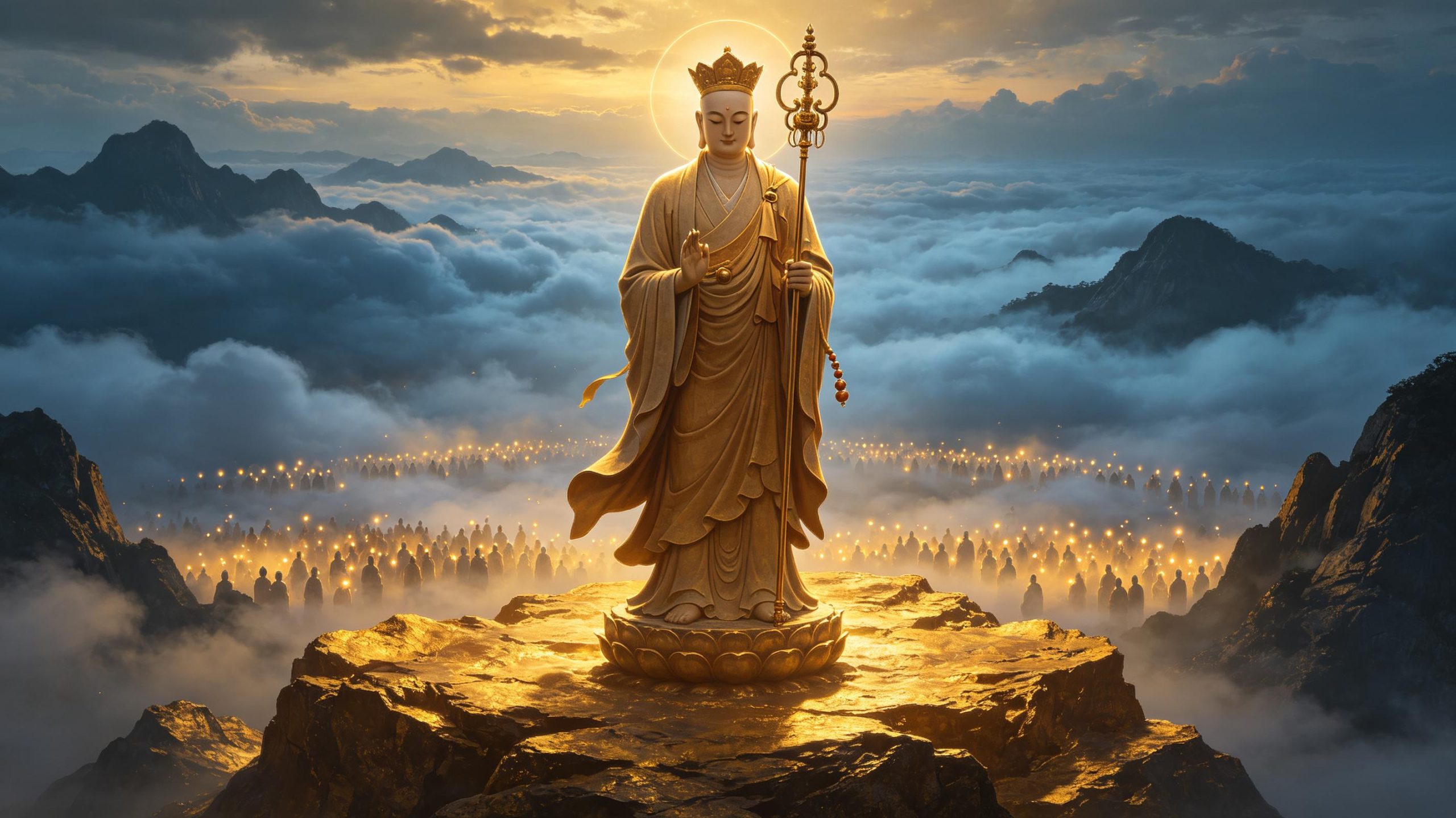
Great Vow as a Mountain, Compassion as the Sea: The Spiritual World of Ksitigarbha Bodhisattva
Among the vast multitude of Bodhisattvas in Buddhism, Ksitigarbha Bodhisattva holds an irreplaceable place in the hearts of countless believers due to his unique vow and image. Honored as the “Bodhisattva of Great Vow” (Da Yuan Dizang Wang Pusa), he stands alongside Manjushri (Great Wisdom), Samantabhadra (Great Action), and Avalokiteshvara (Great Compassion) as one of the four principal pillars of Mahayana Buddhist spirituality. The devotion to Ksitigarbha is not merely a religious practice; it is a cultural symbol deeply rooted in Chinese spiritual soil, intertwining filial piety, moral accountability, and boundless compassion.
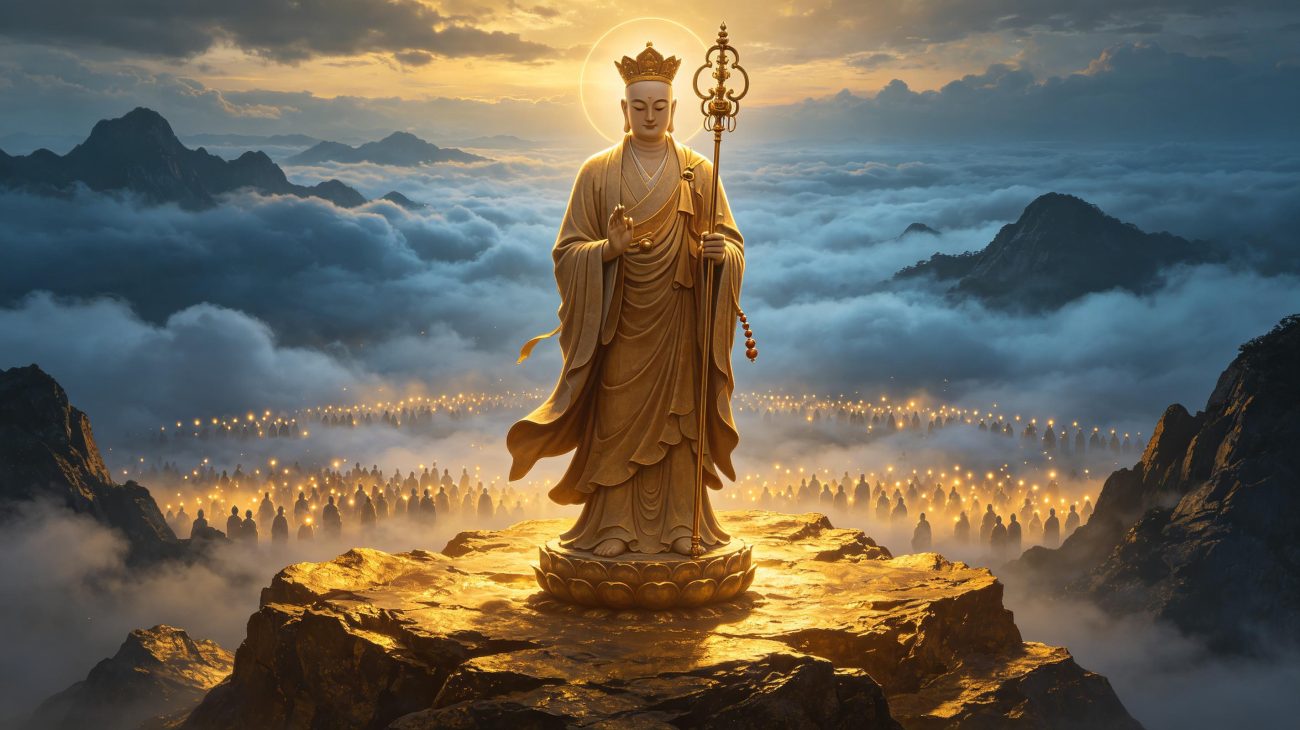
The Deep Meaning of the Sacred Name: Unshakable Patience and Deep Contemplation
The Sanskrit name for “Dizang” is Ksitigarbha, which carries a profound inner meaning.
- “Ksiti” (Earth): Represents the earth, possessing seven extraordinary virtues: it gives life to all things, sustains them, bears their weight, contains hidden treasures, preserves life, provides a foundation, and remains firm and unshakable. This symbolizes that the Bodhisattva’s vow is as vast, solid, and indestructible as the earth itself.
- “Garbha” (Treasure/Womb): Refers to a secret treasure. Just as the earth conceals boundless treasures and good seeds, Ksitigarbha Bodhisattva harbors infinite merit and spiritual wealth to deliver all sentient beings from suffering.
It is precisely because of his virtue—“unshakable in patience like the earth, and deep in contemplation like a hidden treasure”—that he received this sacred name.
The Core of the Great Vow: “Until the Hells Are Empty, I Shall Not Become a Buddha”
What strikes people most about Ksitigarbha Bodhisattva is his soul-stirring and timeless vow:
“Until all sentient beings are delivered, only then will I attain Enlightenment; until the hells are completely empty, I vow never to become a Buddha.”
The root of this profound vow can be traced back to his past lives (Jataka stories) over countless eons.
According to the Ksitigarbha Bodhisattva Purvapranidhana Sutra (Sutra of the Past Vows of Earth Store Bodhisattva), he manifested in past lives as a Brahmin maiden and as a maiden named Bright Eyes (Guangmu) to rescue his mothers who had fallen into hell. Through intense devotion, offerings, and virtue, the Brahmin maiden liberated her mother into the heavenly realm within a day and a night. Bright Eyes, witnessing the heavy karmic retribution her mother faced due to killing, made a monumental vow:
“From this day forward until hundreds of thousands of ten-thousand eons, I vow to rescue all sin-suffering beings in hell and the three evil paths, enabling them to leave these realms behind. Only after all such beings have attained Buddhahood will I myself achieve Supreme Enlightenment.”
This ascension from filial love for one’s birth mother to universal compassion for all sentient beings gives Ksitigarbha’s vow a universal ethical value that transcends ordinary religious devotion.
This principle of “delivering all sentient beings before attaining Buddhahood” embodies the ultimate spirit of self-sacrifice and dedication in Buddhism. During the long, Buddha-less era between the Parinirvana of Shakyamuni Buddha and the advent of Maitreya Buddha, Ksitigarbha Bodhisattva assumed the heavy responsibility of acting as a “surrogate Buddha,” entrusted by Shakyamuni Buddha to guide and transform beings across the Six Realms of Existence. His presence brings a beacon of ultimate liberation and light to beings living in this turbulent, five-defiled world.
Miraculous Manifestations and Unique Iconography
The widespread propagation of Ksitigarbha devotion in China is inseparable from his earthly manifestations. During the Tang Dynasty, Prince Kim Gyo-gak (Jin Qiaojue) of Silla (ancient Korea) was revered as an incarnation of Ksitigarbha Bodhisattva. After entering the priesthood, he traveled to Tang China and devoted himself to deep spiritual practice on Mount Jiuhua in Anhui Province, living in caves and eating white clay.
His rigorous ascetic practice deeply moved the local gentry and Elder Min, who donated the entire Mount Jiuhua as a monastic domain. Elder Min and his son later renounced worldly life to become the Bodhisattva’s attendant disciples. Kim Gyo-gak passed into Nirvana at the age of 99, leaving behind an incorruptible body. His physical frame was enshrined in the Incarnation Hall on Mount Jiuhua, establishing the mountain as one of the Four Sacred Buddhist Mountains of China and the primary holy site (bodhimanda) of Ksitigarbha.
In Han Chinese Buddhist iconography, Ksitigarbha’s appearance is highly distinctive. Unlike most Bodhisattvas, who are depicted as householders adorned with jewel-encrusted crowns, heavenly robes, and necklaces, Ksitigarbha is almost always depicted in the monastic form of an ordained monk—either with a shaved head or wearing a Five-Buddha crown, dressed in a monastic robe, and holding a monk’s staff (khakkhara).
This appearance signifies his willingness to manifest as a pure monk of the field of merit to inspire respect for the Triple Gem and deep faith in cause and effect within a troubled world.
- The khakkhara (monk’s staff) in his hand is used to shake open the gates of hell.
- The wish-fulfilling jewel (cintamani) emits brilliant light to illuminate the darkness of the underworld and alleviate suffering.
Modern Relevance of Ksitigarbha Devotion
The spirit of Ksitigarbha Bodhisattva continues to shine brightly in modern society. His core teachings of filial piety and gratitude align naturally with traditional Chinese values of ancestor worship and honoring one’s roots. The birthday of Ksitigarbha King, observed on the 30th day of the seventh lunar month, remains a significant cultural and religious festival in places like Hong Kong, where communities gather for sutra chanting, processions, and opera performances to honor ancestors and pray for blessings.
On a deeper level, the spirit of Ksitigarbha represents an selfless sense of accountability and absolute devotion to serving others. His compassionate nature as an “uninvited friend”—one who proactively reaches out to offer help without expecting anything in return when beings are in their deepest pain—offers a vital antidote to modern social indifference.
Practicing the spirit of Ksitigarbha means starting with filial respect for one’s parents and care for those around us, then extending that love outward to embrace all sentient life. It calls on individuals to take up social responsibilities and realize the true value of life through dedication and service. Just as the earth bears all things without complaint, Ksitigarbha Bodhisattva’s vows and boundless compassion will continue to provide steadfast refuge and endless hope for all wandering souls.